


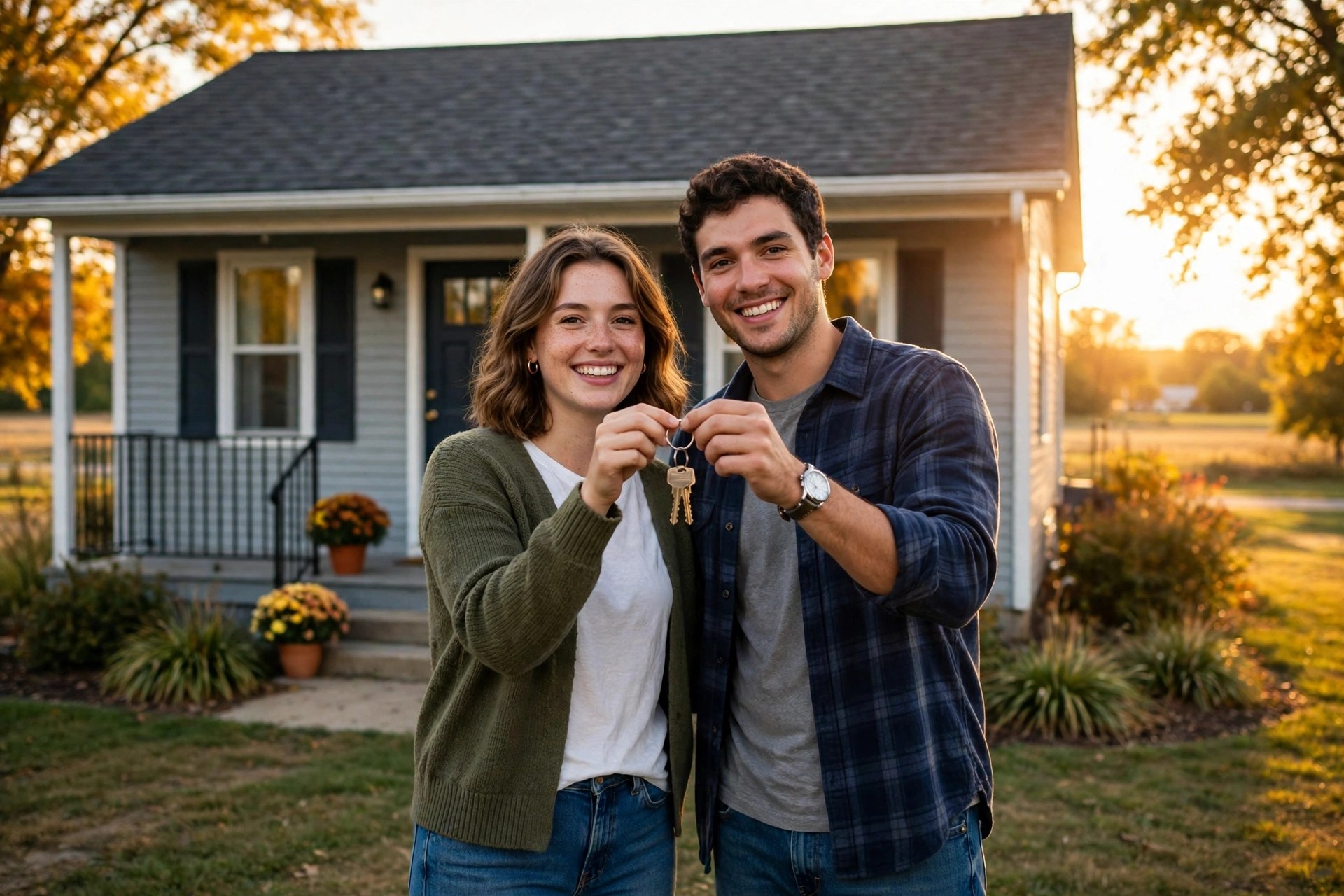
The short answer: more than most people think. Iowa runs its own homebuyer programs, and in 2026 a first-time buyer can get up to $15,000 toward a down payment and closing costs — plus a below-market interest rate on the mortgage itself. Most buyers I talk to have never heard of any of it.
Who counts as a "first-time" buyer?
You probably do, even if you've owned before. For Iowa's FirstHome program, "first-time" means you haven't owned your main home in the last three years. Qualifying veterans and buyers in certain targeted areas can be exceptions. So if you sold a house a few years ago and have been renting since, you may qualify all over again.
The main program: FirstHome
FirstHome is run by the Iowa Finance Authority and pairs two things:
- A first mortgage at a below-market fixed rate.
- Down payment help in the form of a second loan: 3% of the purchase price (up to $10,000) or 5% (up to $15,000) — your choice. That second loan charges 0% interest and has no monthly payment. It's there to cover the upfront cash that stops most renters from buying.
The program changed this fall, so if you read older articles mentioning a $2,500 grant, that's gone for new buyers — the second-loan help that replaced it is worth more anyway.
Do I make too much money to qualify?
Probably not. For 2026, the household income limits run from about $102,000 up to $171,360, depending on your county and household size — and it's household income, not just the borrower's. The purchase price limit is $566,000 (higher, $692,000, in targeted areas), and the minimum credit score is 640. Your lender confirms your county's exact limit, but most working households in the Des Moines metro fit somewhere in that range.
Not a first-time buyer? There's a sibling program.
Homes for Iowans is open to repeat buyers too, with a statewide income limit of $171,360, a purchase price limit of $692,000, and the same down payment second loan. And if you're a veteran or currently serving, ask about the Military Homeownership Assistance Program — a grant of up to $5,000 that can stack with the rest.
Don't forget the regular loan options
State programs layer on top of the standard ones, and sometimes the standard route is the better fit:
- FHA loans: 3.5% down.
- Conventional loans: as little as 3% down for first-time buyers.
- USDA loans: zero down in eligible areas — and many communities just outside the metro qualify, so don't assume your town is too close to Des Moines to count.
- VA loans: zero down for eligible veterans and service members.
Still saving? Iowa gives you a tax break for that, too.
Iowa has a First-Time Homebuyer Savings Account: you open a designated account at your bank, and the money you contribute each year — up to an inflation-adjusted limit, roughly $2,300 for an individual and $4,600 for a married couple — comes off your Iowa taxable income, and the interest isn't taxed by the state either. Parents and grandparents can open one for a future buyer, too. If buying is a two-or-three-year goal, this is free money for saving like you already planned to.
How do you actually get it?
You don't apply to the state yourself. IFA programs run through participating lenders, so the first step is a pre-approval conversation with a lender who offers them — not every lender does. Get that lined up before you fall in love with a house, and the help is just part of the loan.
Thinking about a first home in 2026? Call or text Mitch at 515-371-5002 — Sheila and I will walk you through what you'd qualify for and what it means for your price range, no pressure either way.